
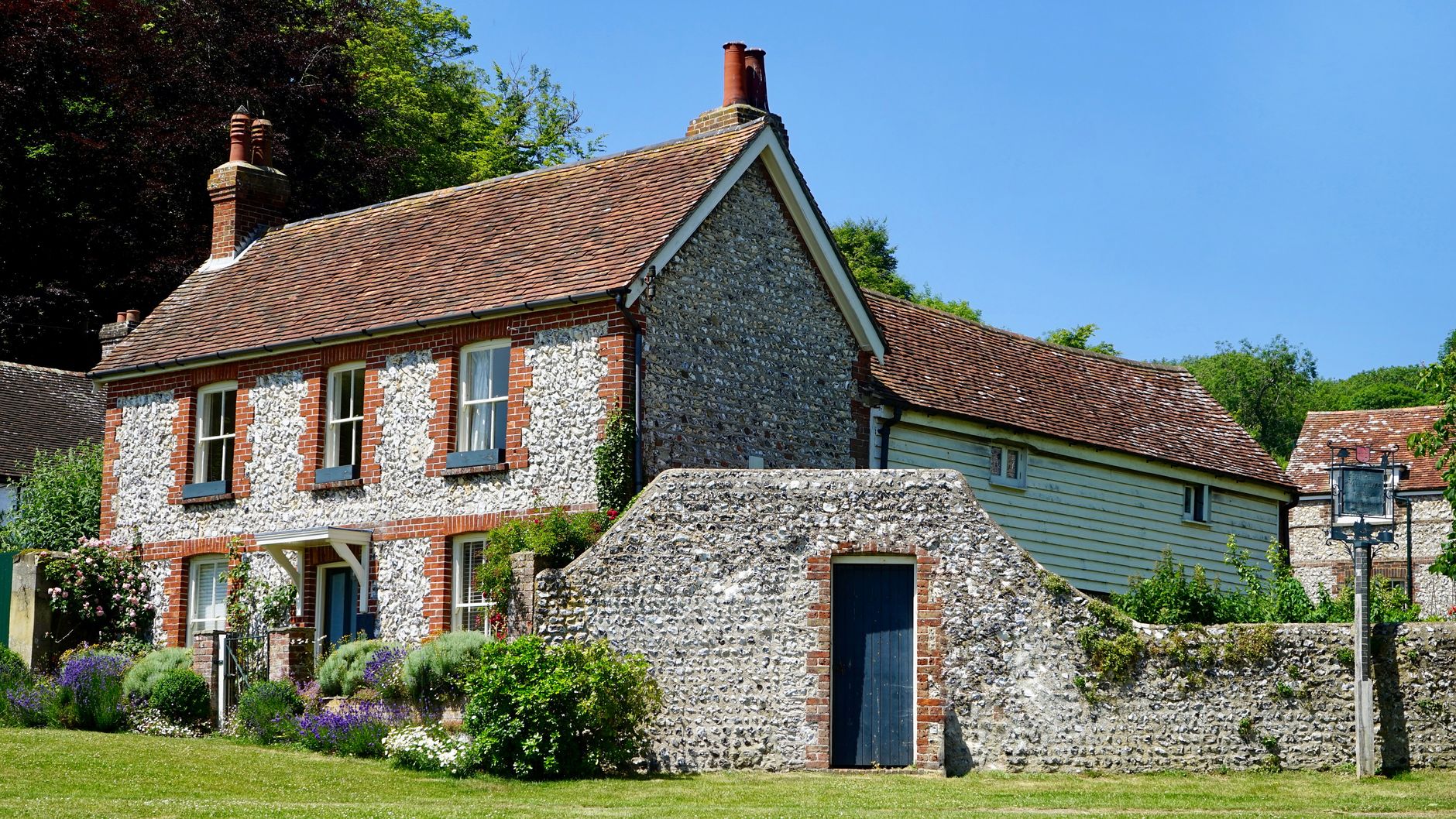
Brick That Sheds Rain but Still Looks Like Brick
Plan This Job
Tell us about the fireplace and what you want from chimney waterproofing. We call back to book a visit, then quote in writing.
What This Job Covers
Brick soaks up winter rain like a sponge, and that water ends up behind a plaster mantel wall or flaking the face outside. Once joints and crown are sound, we wash the masonry and apply a vapour-permeable repellent that lets the brick breathe and leaves the colour unchanged. We test a small patch first so you can see the finish dry. The quote is written after we have looked at the brick.
What a Good Repellent Should Do
Brick and mortar are porous. They take in rain on every storm and dry out again on sunny days, and over the years that cycle wears them down: salts are carried to the surface as white powder, joints soften, and faces flake off. A masonry repellent slows the cycle. It soaks into the surface pores and lines them so rain beads up and runs off, but leaves them open enough for moisture already inside the brick to escape as vapor. That last point matters. Paint and ordinary sealers close the surface, trapping water behind it, and the brick then breaks from inside. Products made for chimneys stay invisible on the brick, without gloss or a darker tone, so the masonry keeps its natural look. The difference between the two is easy to see after a storm: treated brick dries evenly within hours, while painted or film-sealed brick stays dark in patches where water is trapped.
Waterproofing works on masonry that is sound. It does not fill cracks, close open joints, fix a crown or stop water coming past bad flashing. So before any coating, we look at the whole chimney and fix what needs fixing: repointing, crown repair, flashing, a cap. Only then is the repellent applied, in even coats from the top down, with care kept off windows, roofing and paint. The price follows the size of the chimney and how much repair comes first, and it is written up after we see the stack. In Downey, where winter rain comes in bursts and summer sun bakes the brick, a good repellent can add many years of life to a chimney in fair condition. It wears slowly, and a fresh coat every several years keeps it working.
Waterproofing as the Last Coat of a Restoration
When a chimney has been cleaned, repointed in matched mortar and fitted with a new crown and cap, waterproofing is the finishing step that keeps it looking that way. Without it, new mortar joints can darken unevenly in the first rains, and white salt bloom can show on fresh brick. With it, the restored color holds. It is also a sensible step after an old painted chimney has been stripped back to its brick, since the newly exposed surface takes in water easily. For homes in Whittier and Downey with older brick chimneys that have character worth keeping, it is a small cost to protect a large investment. Applied any earlier, before the mortar has cured, the repellent can slow the curing and leave the new joints weak, so we leave a gap of a few weeks between the masonry work and the coating, and plan the return visit at the outset.
The same thinking applies indoors, though differently. A brick or stone fireplace face does not see rain, but it does see soot, grease from cooking in open plan houses, and the odd spilled drink. A penetrating stone sealer on a limestone or travertine surround, or a matte sealer on unglazed brick, makes it easier to keep clean without changing its look. We match the product to the material and test it on a hidden spot first, since some sealers deepen the color of stone slightly and you should see that before the whole face is done. If you are planning a remodel or a restoration, mention it on the form and we will plan the waterproofing into the sequence. Homes in Norwalk and Monterey Park are served on the same terms as Downey.
How Wainwright Chimney Experts Finishes a Hearth Job
Flue Before Finish
Firebox and chimney checked before anything decorative
Drawn to Scale
Surround and mantel sized to your wall
Written Quote First
Every material and repair on its own line
Photos at the End
The finished hearth recorded, with a care note
Chimney Waterproofing near you
Pick your city to read how the job fits the homes there, from postwar brick to newer gas units.
Nothing on our list matches that. A neighbouring town or a ZIP code may work better.
More Services
Chimney Sweep
Flue soot cleared so pale stone, fresh plaster and a new mantel stay clean above the opening instead of streaking grey.
Learn More →Chimney Inspection
A look at the flue, crown and firebox before money goes into tile, stone or a mantel, so the design sits on sound bones.
Learn More →Chimney Repair
Structural fixes above the mantel and on the roof, done before a remodel or after one turns up hidden wear.
Learn More →Fireplace Inspection
Firebox, hearth and surround checked for heat damage and clearances before you commit to new materials around the opening.
Learn More →Fireplace Repair
Cracked firebrick, tired panels, a sticking damper or loose facing repaired so the fireplace works as well as it looks.
Learn More →Chimney Level 2 Inspection
Video of the whole flue plus the hidden sections, booked before a conversion, an insert or a home purchase.
Learn More →Chimney Cap Installation
Stainless or copper caps fitted to the flue and picked to suit the roofline, keeping rain, birds and embers in check.
Learn More →Chimney Flashing Repair
Roof-line leaks stopped before they stain a new ceiling, plaster face or painted mantel inside.
Learn More →Chimney Masonry Repair
Brick and stone outside brought back to sound, with mortar colour and joint profile matched to the house.
Learn More →Chimney Rebuilds
A cracked or leaning stack rebuilt in brick or stone that suits the house, with a new flue inside it.
Learn More →Fireplace Cleaning
Ash, soot film and smoke marks lifted from firebox, glass and surround so stone, tile and brick show their real colour.
Learn More →Gas Fireplace Cleaning
Burner, pilot, ember bed and glass serviced so a gas fireplace shows a full, even flame behind clear glass.
Learn More →Gas Fireplace Repair
Weak flames, failed starts and dead remotes traced to the part and fixed, so the fireplace lights on demand again.
Learn More →Fireplace Remodel
New surround, mantel, hearth or full refacing in tile, stone, plaster or wood, built to clearance and proportioned to the room.
Learn More →Fireplace Inserts
A gas, wood or electric insert set into the existing opening, with a trim frame that suits the new or old surround.
Learn More →Pellet Stove Repair
Stalled augers, dead igniters, noisy blowers and board errors tracked down and repaired, plus a vent brushing while we are there.
Learn More →Wood Stove Repair
Seals, firebrick, baffles and stovepipe renewed on wood stoves, with the hearth pad and wall shield checked too.
Learn More →Gas Logs
Realistic gas log sets in oak, birch or driftwood styles, set into a wood-burning firebox and piped to a valve within reach.
Learn More →Chimney Seismic Retrofit
Brick chimneys braced or rebuilt lighter above the roof so a strong quake is less likely to drop masonry.
Learn More →Chimney Crown Repair
Cracked or shallow crowns resealed or recast with a proper overhang so rain stops reaching the brick and flue.
Learn More →Dryer Vent Cleaning
Lint cleared from the dryer duct to the outside hood, often booked alongside a fireplace visit at the same house.
Learn More →Chimney Liner Installation
Stainless liners fitted inside cracked or unlined flues, and for every insert or gas conversion we install.
Learn More →Chimney Leak Repair
Water stains on a ceiling, mantel wall or firebox traced to the real entry point and fixed before finishes suffer.
Learn More →Chimney Damper Repair
Throat dampers freed, rebuilt or replaced, or a top-mounted damper fitted, so the fireplace seals when it is not in use.
Learn More →Chimney Chase Cover
Rusted chase tops on factory-built fireplaces swapped for stainless or powder-coated covers made to measure.
Learn More →